

The Still @ Backroads Distilling

Pot stills are large, pot-shaped copper vessels used for batch distillation, favored for their ability to enhance flavor by removing sulfur compounds. They produce rich, full-bodied spirits with higher alcohol content, making them ideal for aging beverages like whiskey and rum.
-
Pot stills are traditional, pot-shaped copper containers designed for batch distillation, known for their excellent heat conductivity and capability to improve flavor by eliminating sulfur compounds. The distillation process involves heating a liquid to collect alcohol vapors, after which the still must be cleaned before the next batch, making it less efficient than other methods. Spirits produced in pot stills boast a richer flavor and heavier texture, as they allow more congeners to pass through. This method is particularly well-suited for creating aged spirits like whiskey and rum, achieving an alcohol by volume (ABV) of up to 80% after multiple distillations.


Column stills are tall, cylindrical vessels designed for continuous distillation, allowing for a more efficient and faster production process. They produce purer, lighter spirits with higher alcohol content, making them ideal for beverages like vodka and gin.
-
Column stills are tall, cylindrical distillation units that enable continuous production of alcohol, making the process faster and more efficient than traditional pot stills. This method allows for a steady stream of spirits, achieving alcohol by volume (ABV) of up to 96%. The resulting spirits are generally purer and lighter in flavor, making them perfect for creating beverages such as vodka and gin. Column stills are favored for their consistency and ability to produce high-quality spirits in larger quantities.


A rectifier is a vital part of the distillation process that purifies alcohol by removing impurities through repeated distillation, ensuring a high-purity final product. Additionally, the still safe monitors the distillate flow and quality, while the shotgun condenser cools and refines vapors, enhancing the purity of spirits like vodka and whiskey.
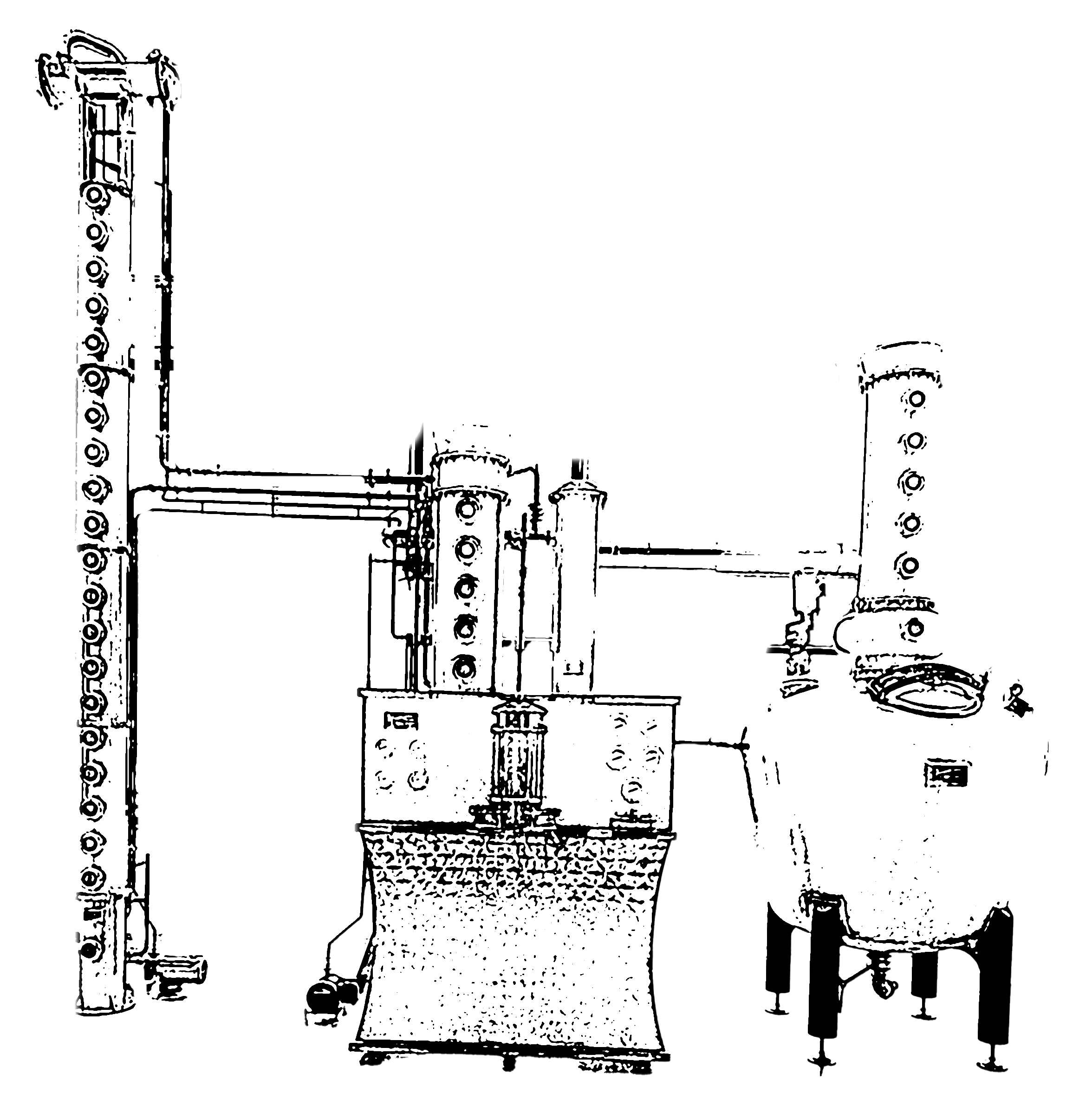
-
The rectifier plays a crucial role in the distillation process by purifying alcohol through repeated or fractional distillation, effectively removing impurities such as water and fusel oils to achieve a high-purity final product. This step is particularly important for spirits like vodka, where a clean, neutral flavor is desired. Additionally, the still safe is essential for monitoring and controlling the distillate flow, ensuring that only the desired alcohol is collected while impurities are separated. The shotgun condenser further refines the distillate, cooling hot vapors to enhance the purity of the final product, allowing for precise control over the separation of different fractions during distillation.